


Milan unveils its beauty in its details: wrought-iron railings, handrails, stained glass, and geometric motifs that tell over a century of urban history. In recent years, some designers have drawn inspiration from Milanese architecture to create jewelry.
. Milan reveals its beauty through details: wrought-iron railings, handrails, stained glass, and geometric motifs that narrate over a century of urban history. In recent years, several designers have drawn inspiration from Milanese architecture to create distinctive pieces of jewelry.
Milan, a city of architectural details and hidden symbols
Milano non è una città che ostenta la propria bellezza. Al contrario, spesso la nasconde dietro portoni monumentali, cortili interni e androni ricchi di decorazioni. È proprio qui che si trovano molti dei simboli di Milano: elementi ornamentali, materiali e motivi geometrici che definiscono l’identità architettonica della città.
Tra fine Ottocento e prima metà del Novecento, Milano vive una stagione creativa straordinaria. Accanto alle architetture liberty, si sviluppa anche il razionalismo milanese, che introduce un linguaggio più geometrico ma sempre attento al dettaglio decorativo.
Passeggiando per la città si possono osservare elementi ricorrenti:
- ringhiere in ferro battuto con motivi floreali tipici del liberty
- maniglie e corrimano in ottone negli androni dei palazzi anni Trenta
- vetrate decorative colorate negli ingressi dei condomini storici
- motivi geometrici su cancelli, pavimenti e portoni
Molti di questi dettagli si trovano in edifici progettati da alcuni dei più importanti architetti milanesi del Novecento, tra cui Piero Portaluppi, autore di numerosi edifici iconici della città. Tra le sue opere più celebri:
- Villa Necchi Campiglio, esempio raffinato di architettura milanese tra razionalismo ed eleganza borghese
- il Planetario Ulrico Hoepli
- theArengario complex in Piazza Duomo
These buildings are not only important for their monumental architecture, but also for their details: floors, decorations, and geometric patterns that today represent true symbols of Milan.
The unbreakable bond between Milan and Ramispera jewelry
From these elements comes the creative project of Ilaria Azzolin, Milan-based designer and founder of the brand Ramispera. After working abroad between Stockholm and Amsterdam, Azzolin decided to return to her city and tell her story through the language of goldsmithing.
The idea is simple but original: to transform the details of Milanese architecture into handcrafted jewelry.
Each creation starts from a precise urban element, often observed during walks through the city streets or spotted in the doorways of historic buildings. The jewelry thus becomes a kind of emotional map of Milan.
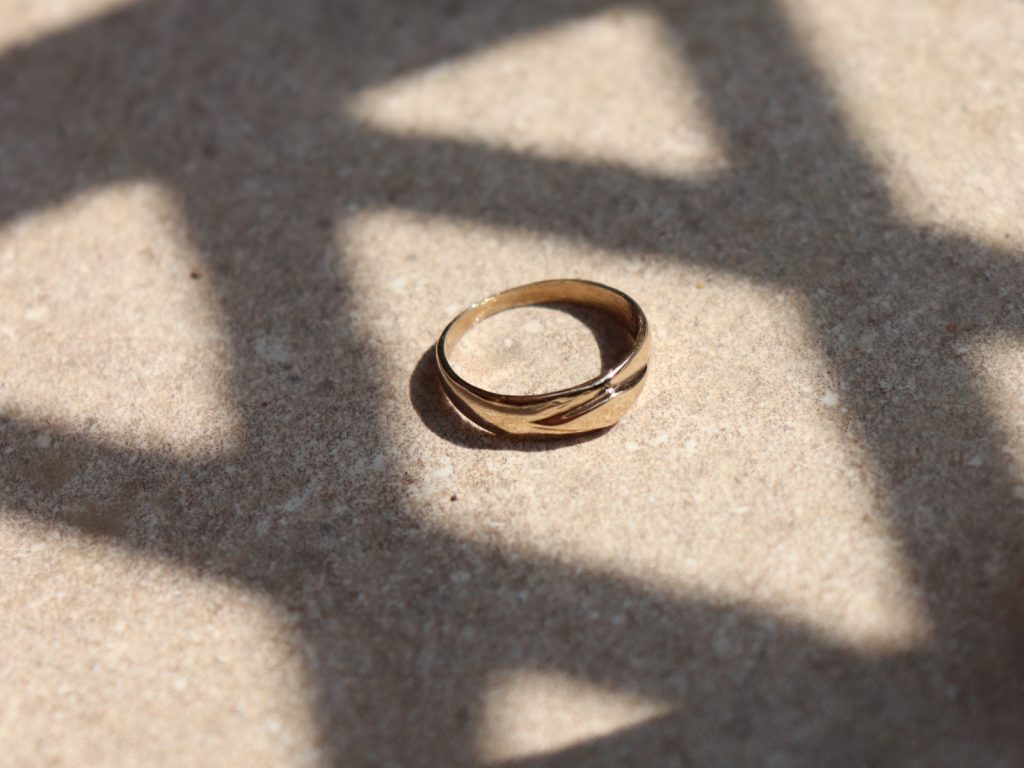
The brand’s main sources of inspiration include:
1. Portaluppi’s lozenge
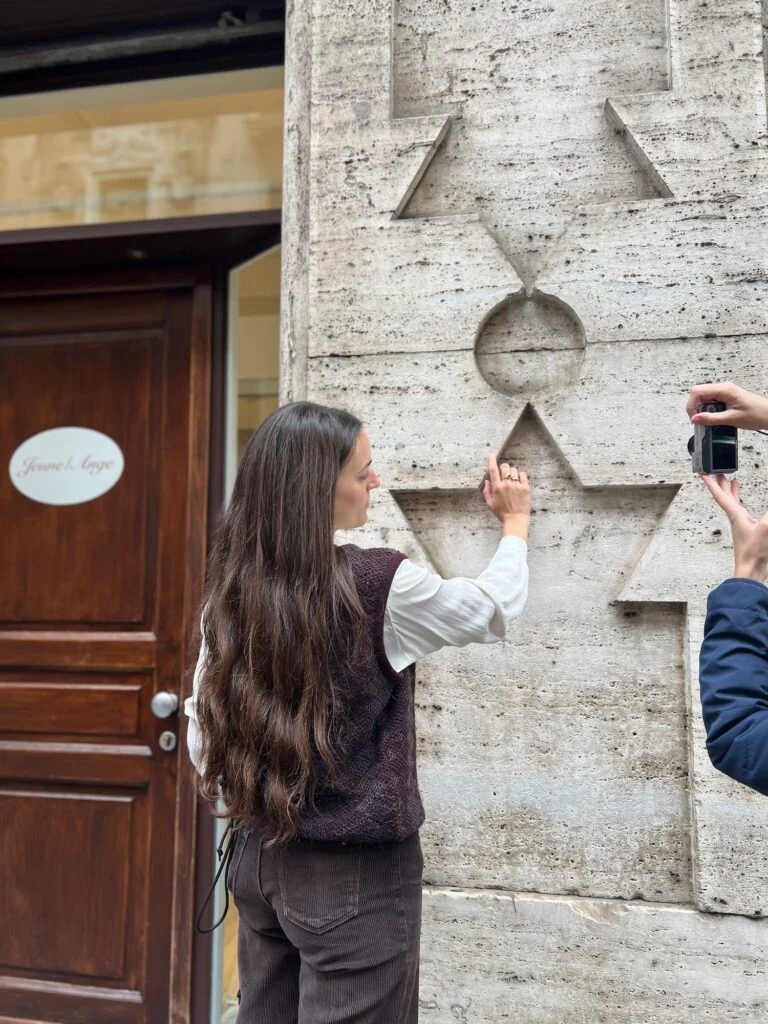
It is probably the most representative symbol of Ramispera. The lozenge, a geometric shape much used by the architect Portaluppi, appears on doorways, floors and decorations of several Milanese buildings.
Azzolin chose this very figure as:
- brand logo
- decorative element of rings and pendants
- aesthetic symbol of twentieth-century Milan
The first jewel in the collection was created precisely by tracing a lozenge found in the inner doorway of Villa Necchi Campiglio, maintaining the original proportions designed by the architect.
Discover here the seven house museums in Milan to visit
2. The “Palladian” floors.
Another element reinterpreted in the jewelry is the typical Venetian floor formed by irregular marble chips.
This motif inspired:
- Palladian ring, characterized by fragmented geometries
- The use of natural stones such as quartz and warm shades
3. The handrails of Milanese palaces
The hallways of palaces built between the 1920s and 1940s often feature fluted handrails or handrails with elegant profiles.
Hence the Corrimano capsule collection, which takes up:
- vertical grooved lines
- rhythmic metal surfaces
- elongated, minimalist volumes
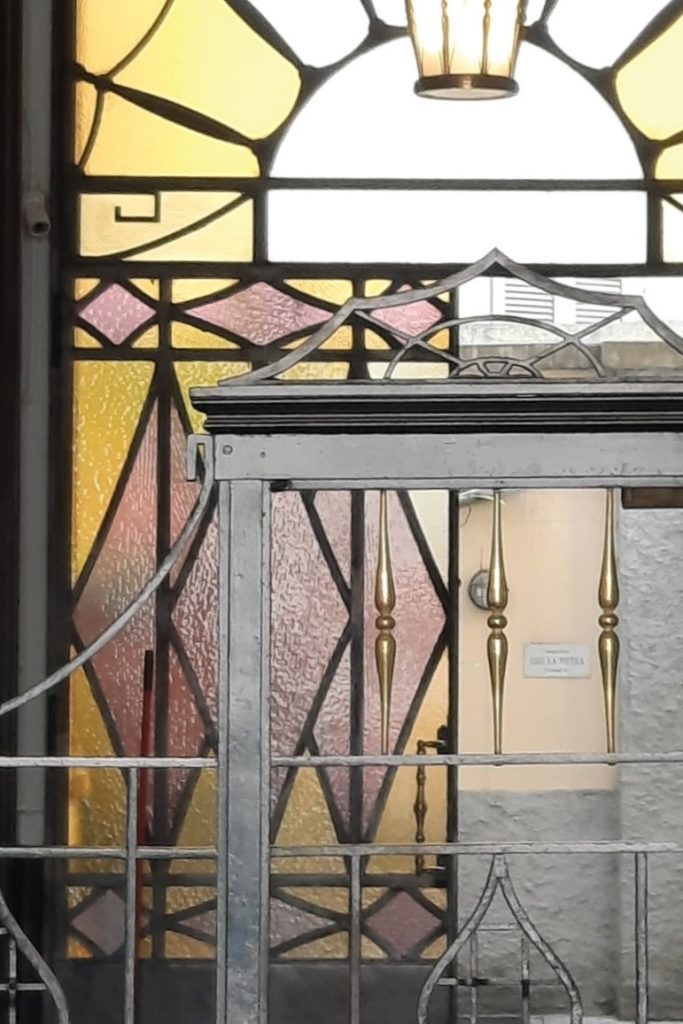
4. The stained glass windows of historic entrances
One example cited by the designer is the stained glass window at the entrance of a 1930s building at 32 Tunisia Avenue, designed by Paolo Mario Lamborizio.
Its color tones influenced:
- the palette of stones used
- the use of olive greens and warm browns
The choice of materials is also not random. Ramispera’s jewelry is made mainly of brass, a material very present in the hallways and furnishings of twentieth-century Milanese palaces.
Motifs and symbols, jewelry inspired by Milanese architecture
Ramispera’s work demonstrates how architecture can become a true creative language for goldsmithing. Through careful urban observation, the designer identified numerous symbols of Milan that are repeated in the facades and interiors of buildings.
Among the most recurrent motifs reinterpreted in jewelry are:
- Geometric lozenges typical of Portaluppi’s architecture
- Decorative circles and stars found on gates and balconies
- leaf motifs derived from Art Nouveau decorations
- Ornamental balustrades and railings of early 20th century buildings
- Markers and bas-reliefs of Milanese facades.
A project carried out together with the Addvent graphic collective even collected 24 decorative motifs from Milanese architecture and transformed them into a visual map of the city. Each symbol was identified through photographic research and surveys among the streets of Milan.
The result is a true urban aesthetic grammar: a collection of signs that tell the story of the city and, once recognized, become impossible to ignore.
When architecture becomes a jewel
Jewelry inspired by Milanese architecture, particularly the symbols of Milan are not mere accessories, but small fragments of the city. They tell of doorways, courtyards and details that often go unnoticed, transforming architecture into something intimate and personal.
In this way, the city does not remain only in urban space: it becomes memory to be worn.
Are you interested in a prestigious property in Milan? Find the solution for you here.
Photo courtesy Ramispera